

When it comes to upgrading your home or commercial space, choosing the right type of door is a decision that carries both functional and aesthetic weight. In the world of doors, two common options often come head-to-head: prehung doors and slab doors. While the terminology might seem niche, the choice you make can significantly affect installation complexity, budget, durability, and design.
Understanding the core distinctions and applications of these two door types is essential for both first-time homeowners and seasoned contractors alike. Whether you’re renovating a charming historic home or spearheading a new office build, the type of door you choose impacts not just looks, but also energy efficiency, security, and ease of use.
In this in-depth, expert-reviewed article, we’ll break down everything you need to know about prehung doors vs slab doors, including definitions, advantages, disadvantages, cost factors, use cases, installation considerations, material options, design trends, and pro-level tips to help you make the best decision in 2025 and beyond.
Let’s open the door to your perfect choice.
What Are Prehung Doors?
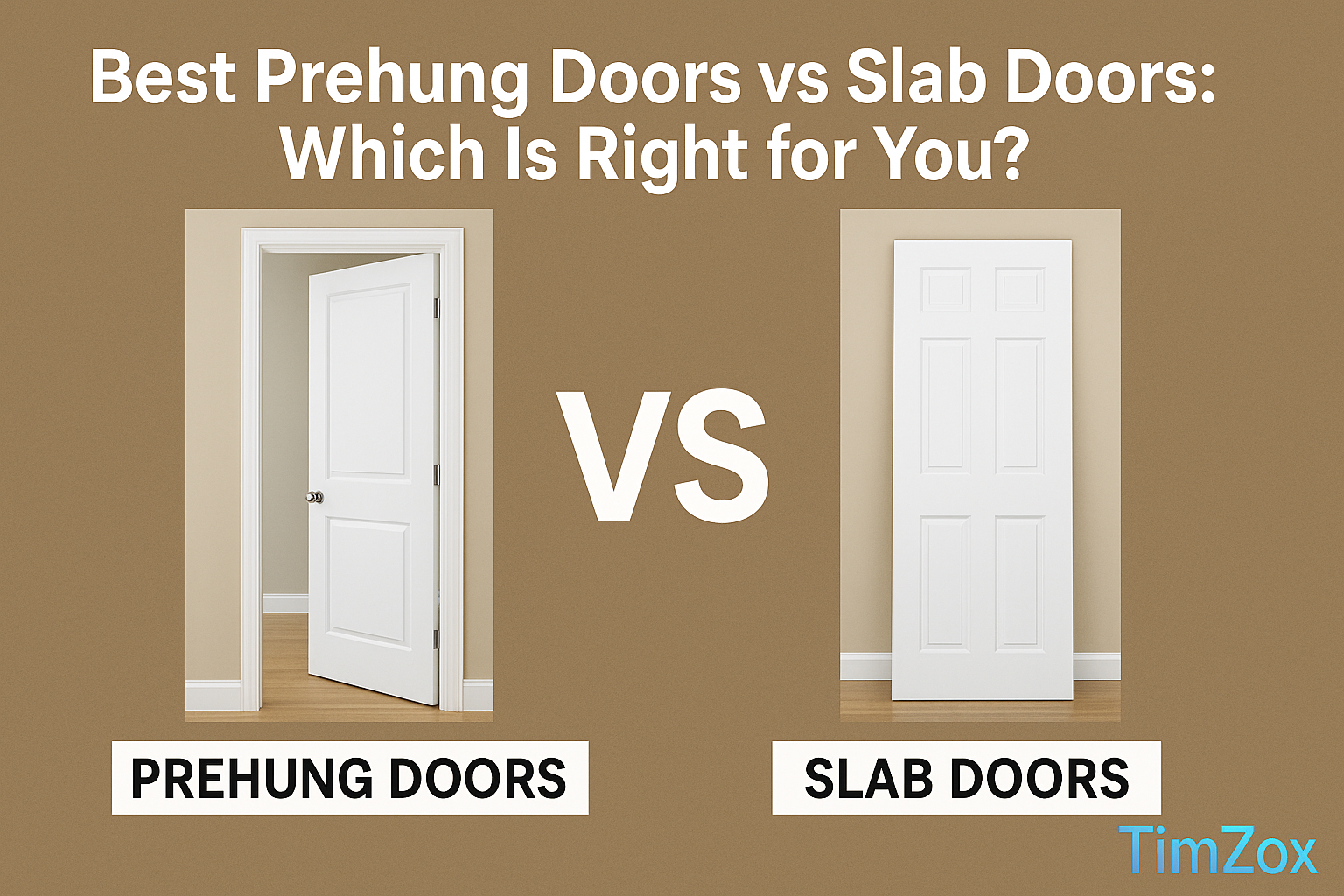
A prehung door is a door that comes already mounted in a frame, complete with hinges and often pre-drilled holes for a handle and lock. Essentially, it’s a complete door system—just slide it into the wall opening and secure it.
Components of a Prehung Door:
- Door slab (the door itself)
- Frame or jamb
- Hinges
- Weatherstripping (for exterior doors)
- Pre-drilled holes for hardware (optional)
- Threshold (for exterior doors)
Advantages of Prehung Doors:
- Ease of installation: Especially ideal for new construction or rooms where the frame is damaged or non-existent.
- Better sealing: Especially important for exterior doors, which benefit from factory-installed weatherstripping.
- Time-saving: Comes ready to install with fewer adjustments needed.
- Fewer alignment issues: Everything is squared up by the manufacturer.
- Factory-tested durability: Often inspected for integrity and fit before shipment.
Disadvantages:
- Heavier and bulkier: More difficult to transport, especially for DIYers.
- More expensive: Usually pricier upfront compared to slab doors.
- Not ideal for renovation: If your frame is already in good shape, a prehung door might be unnecessary.
- Can be damaged in transit: As the unit is larger and more fragile in packaging.
What Are Slab Doors?
A slab door is simply the door panel itself—no frame, no hinges, and no hardware. It’s a blank canvas that requires installation into an existing frame. This makes it a preferred option for customization and renovation projects.
Common Types of Slab Doors:
- Solid wood
- Hollow core
- MDF (Medium Density Fiberboard)
- Glass-paneled or French doors
- Louvered doors
- Panel doors
- Barn doors (sliding slab style)
Advantages of Slab Doors:
- More affordable: Lower initial cost compared to prehung systems.
- Customizable: Great for matching existing architectural styles.
- Better for renovations: Perfect if your door frame is still intact and functional.
- Easier to store: Takes up less space during transit and storage.
- Wider material variety: More finishes, designs, and styles to choose from.
Disadvantages:
- More labor-intensive: Requires precise measuring, hinge cuts, and alignment.
- Not always ideal for beginners: Can be challenging for DIY installations.
- Inconsistent fit: May require trimming or planing to fit the existing frame.
- Additional hardware required: Hinges, knobs, and latches must be sourced separately.
Prehung vs Slab Doors: Key Differences
| Feature | Prehung Door | Slab Door |
|---|---|---|
| Includes Frame? | Yes | No |
| Ideal For | New constructions, exterior doors | Renovations, interior doors |
| Installation Complexity | Easier but heavier | More complex, lighter |
| Cost | Higher | Lower |
| Customization | Limited | High |
| Transportability | Bulky | Easier to carry |
| DIY-Friendly | Moderate | Difficult for beginners |
| Material Options | Standardized | Extensive |
| Lead Time | Often shorter | Can be longer for custom designs |
Which One Should You Choose in 2025?
Your choice between a prehung and a slab door will largely depend on your specific needs, budget, and skill level. Here’s a breakdown by use case:
Choose Prehung Doors If:
- You’re doing new construction or a complete remodel
- The existing door frame is damaged or warped
- You’re installing an exterior door and want better insulation
- You want a quick, plug-and-play installation
- You want fewer on-site labor hours
- You’re prioritizing energy efficiency and security
Choose Slab Doors If:
- You’re replacing a door but keeping the current frame
- Your home has custom or historical architecture
- You need a more affordable option
- You’re working with lightweight interior doors
- You want complete control over design and material
- You’re skilled in carpentry or hiring a specialized installer
Cost Comparison in 2025
Understanding the financial aspect can help narrow your choice. Here’s a closer look at the cost breakdown:
Prehung Door Pricing:
- Interior prehung door: $150–$500 (materials + basic installation)
- Exterior prehung door: $400–$1,200 or more, depending on material, insulation, and security features
- Custom or high-end designs: $1,500–$3,000
Slab Door Pricing:
- Interior slab door: $30–$300 (depending on material)
- Exterior slab door: $150–$600
- Custom slab doors: $700–$2,000 (glass inlays, exotic wood, etc.)
Pro Tip: Labor costs for slab door installations can match or exceed the cost of the door itself, depending on complexity and finish requirements.
Expert Insights
“In commercial applications, prehung doors offer a faster, more controlled installation process, reducing labor costs over multiple units. Slab doors, however, remain a favorite in residential renovations where aesthetics or frame preservation are important.”
— John Rivera, Lead Installer, BuildCore Solutions
“Choosing between prehung and slab isn’t just about price. Think about thermal performance, acoustic sealing, and door swing. Each type plays a different role based on context.”
— Melissa Chan, Architect & Interior Designer, MChan Studio
Real-World Case Study
Case Study: Office Renovation in Austin, TX
A mid-size firm undergoing an office remodel chose slab glass doors to maintain their original aluminum frames. The project saved over $8,000 in framing and material costs by reusing existing infrastructure. However, they hired a specialty installer to ensure perfect alignment, increasing labor costs slightly.
Result: Enhanced aesthetic continuity, significant cost savings, and successful code compliance with customized hardware solutions.
Installation Tips
Proper installation ensures long-term performance, security, and visual appeal.
Installing a Prehung Door:
- Measure the rough opening.
- Remove the old frame if necessary.
- Position the prehung door.
- Shim to ensure it’s level.
- Nail or screw into place.
- Seal with foam insulation or caulk.
- Install handle and deadbolt (if not pre-installed).
Installing a Slab Door:
- Measure the existing frame.
- Trim door edges if needed.
- Mark and chisel hinge placements.
- Attach hinges and test swing.
- Drill handle and lock holes.
- Mount into frame and align carefully.
- Sand and finish as desired.
Always double-check plumb, square, and swing clearance during installation for both types.
Frequently Asked Questions (FAQ)
What is easier to install: prehung or slab door?
Prehung doors are generally easier to install for beginners, while slab doors require more skill and precision.
Are slab doors cheaper than prehung doors?
Yes, slab doors are usually more affordable up front but may incur higher labor costs if professional installation is needed.
Can you replace a prehung door with a slab?
Yes, but you’ll need to ensure the existing frame is intact and compatible.
Do slab doors come with handles?
No, slab doors typically don’t come with handles, hinges, or any pre-installed hardware.
Are prehung doors better for exterior use?
Yes. They usually include weatherstripping and tighter seals for insulation and security.
Final Verdict: Prehung or Slab Door?
In summary, prehung doors are ideal for new builds, damaged frames, and exterior use, offering convenience and better sealing. Slab doors, on the other hand, are budget-friendly and great for replacements or custom styling.
Choosing between the two depends on your goals: efficiency vs customization, cost vs control.
If you’re still unsure which to choose, consult a door specialist or contractor to evaluate your specific situation.
For a deeper comparison and to see quality examples, visit this guide from APRO Door — a trusted resource in high-quality door systems.